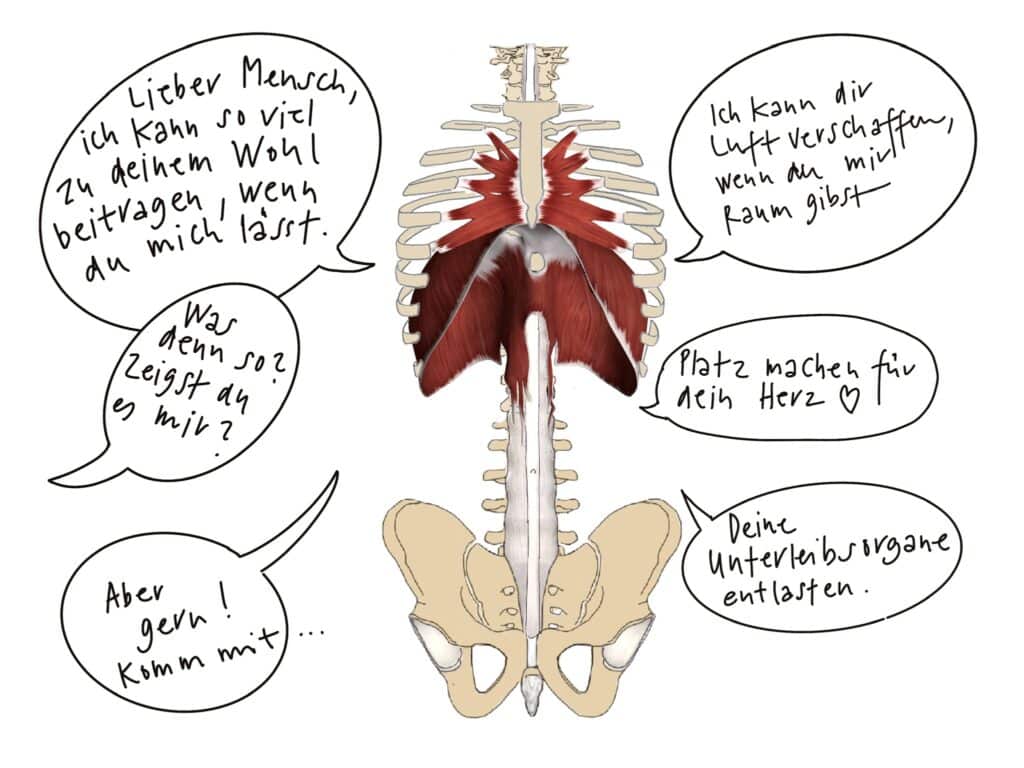
My dear friend
I’ve been meaning to write you this letter for a long time—now I’m finally doing it.
I’m so happy that you’ve found a way to breathe properly! I still remember very well what it used to be like: trial and error—with a lot, a lot of error.
You believed and followed every piece of nonsense. Whether you read it in a magazine, were told by a therapist, or heard it through the grapevine—you were like a sponge. Always searching. Searching too long in the outside world.
You took a deep breath into your belly. Often, your shoulders would hunch forward and up as you did so. Your back began to ache. Your asthma got worse and worse, occurring more and more frequently for no apparent reason. Every winter, a cough would come over you. You felt dizzy from all the coughing and wheezing.
Climb a flight of stairs quickly? Impossible. I get a stitch in my side and pain in my chest.
Your reaction to that? “I need to breathe even deeper.” I tried to nudge you, to wake you up: “Hey, you’re breathing yourself sick—listen to me, I’ll show you how it’s done. You’ll only find the truth through me.” Sometimes—very rarely, I think, only ever in the spring—you came very close to my truth: when you stuck your nose into a lilac bush and gently inhaled the scent of lilacs.
You’d also nestled your nose into the magnolia blossoms. In the summer, the rose blossoms drew you in. Sometimes, after a summer rain, you’d sniff the tree bark in the forest and breathe it in deeply. In moments like those, my heart would beat a little faster with happiness, always hoping: Now she feels it! Now she gets it! I don’t want to be overwhelmed, I don’t want to drag you down, I don’t want to make you feel small!
I don’t want to be part of this misconception, this imposition of the mind over the body.
You searched and practiced—yet another breathing technique, yet another voice training exercise, yet another speech class—and everything just kept getting worse. You felt smaller, and your scoliosis unleashed its full potential for pain …
Interjection: You were an old woman even when you were very young. How wonderful that today it’s the other way around: You’re young in your old age! And I’ve played a big part in that.
The breathing troubles took their course—until one day you got the idea to listen to me. I’ll never forget the moment I heard you say, “This isn’t going to work. I give up. Dear diaphragm, show me how to breathe. Show me what you want, how you work!” I seem to recall that a “damn it” was tacked on at the end, and I reveled in my triumph. But only for a moment—the length of half a breath. Your despair was great; I had to set you free.
That’s what I told you: “Stretch yourself out, live up to your full potential. Be the person you were meant to be.”
Now breathe in through your nose, hold it for a long time, and hold it even longer. That’s all you need to do so I can expand upward. I expand, pulling your abdominal and back muscles upward with my trunk muscles. I expand to the sides, wonderfully supported by the ribs, which stretch sideways to their full width, equipped with cartilage and six joints per pair of ribs.
Hold your breath as long as you can, and position your tongue upright in your mouth as a wonderful source of additional support. Let your breath flow back out into the world through your mouth, slowly and mindfully. Stay long, wide, and open. Enjoy the emptiness that arises when you have exhaled completely. Feel how I relax as I do this. Breathe in slowly again—the lilac-scented breath.”
You listened to me. You took your time; I remember that you felt dizzy and lay down on the floor so you could continue experiencing the Neuatem.
I like that quality in you—that impatience to immediately internalize the change and make it part of your memory. That’s a good kind of impatience. You celebrated this new way of breathing, practiced it every day, and whenever you felt the old shortness of breath trying to take over in a challenging situation, you paused, opened yourself up—and opened me up—and together we found our way back to calm. You call this calm “oceanic calm”—I really like that.
You haven’t caused me to have an asthma attack since that day. You’ve explored what the ribs do when breathing properly and which muscles are involved. You’ve explored how important body posture and head position are so that I can expand effortlessly and without limits.
You’ve realized that I can do so much more than just breathe with you. Together, we’ve reshaped your chest, straightened your spine, and corrected your scoliosis. We’ve set your heart free. It beats steadily and calmly within your broad chest. It sways to our rhythm.
You have created exercises that allow everyone to learn how to breathe with dignity, so that every diaphragm in the world can breathe happily alongside its human.
I am very pleased with your eagerness to pass on the wisdom I taught you. I am happy to be your diaphragm.
With love, your diaphragm
A short breathing exercise that instantly makes you feel relaxed and at ease
Stand against a wall. Keep your buttocks relaxed, and position your heels at an appropriate distance from the wall.
Place your hands on your groin. Press your shoulder blades and buttocks against the wall.
Imagine clouds beneath your feet. Visualize your lower legs extending upward from your ankles. Visualize your thighs extending upward from your lower legs. Visualize your pelvis rising upward. Stretch your chest away from your pelvis, upward.
Hum along to “nnnn.” Let the “Nnnnnn” fill your skull, filling it with the “Nnnnn” for as long as your breath holds out. Relax your larynx with a gentle “Gggg.”
Now hold your tongue upright in your mouth. If it doesn’t work on the first try, just repeat it. “Ng ng ng”—gently and softly, more like a hum than speech.
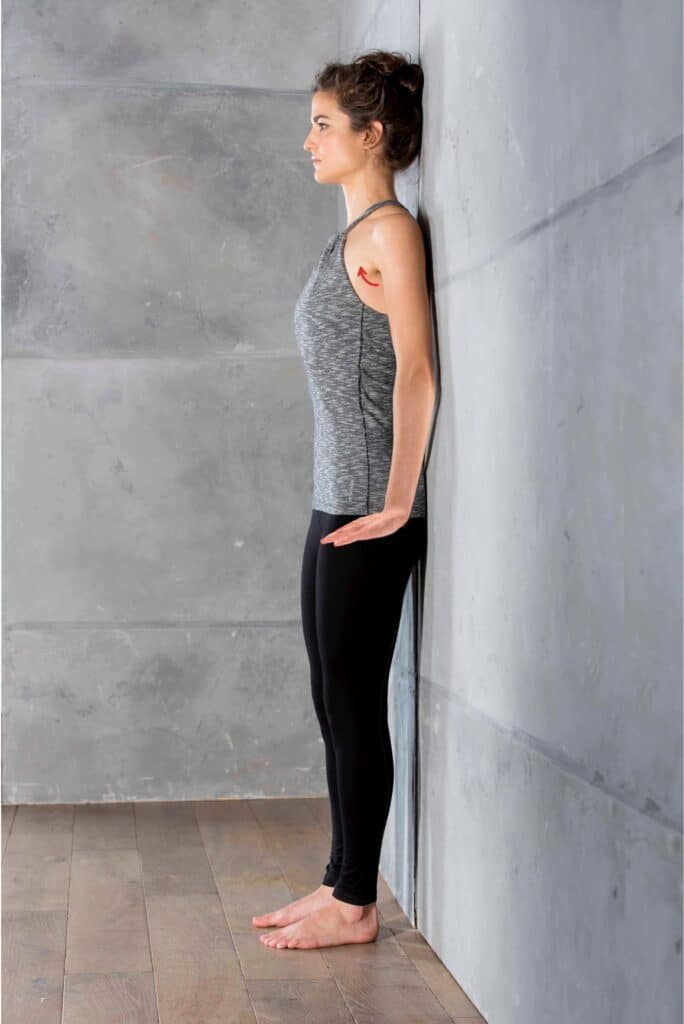
Inhale through your nose while simultaneously spreading your elbows out to the sides and gently rotating your armpits forward and upward until your upper arms are pressed against the wall. Keep your hands on your groins. Let your diaphragm do the work. Exhale gently through your mouth. Repeat until the stretch in your chest and arms feels effortless.
Place your right hand on your right side of the chest and your left hand on your left hip.
Inhale through your nose, slowly and deeply, extending your elbows out to the sides and pressing your upper arms against the wall until you can clearly feel your diaphragm expanding in the right side of your chest.
Exhale deeply while maintaining your posture. Feel how your body stretches even further away from the floor as you exhale, how it becomes even longer.
Place your left hand on your left side of the chest and your right hand on your right hip; inhale, stretching your elbows out to the sides along the body’s diagonals. Exhale, and as you exhale, lengthen your body even further.
Repeat each diagonal three times.
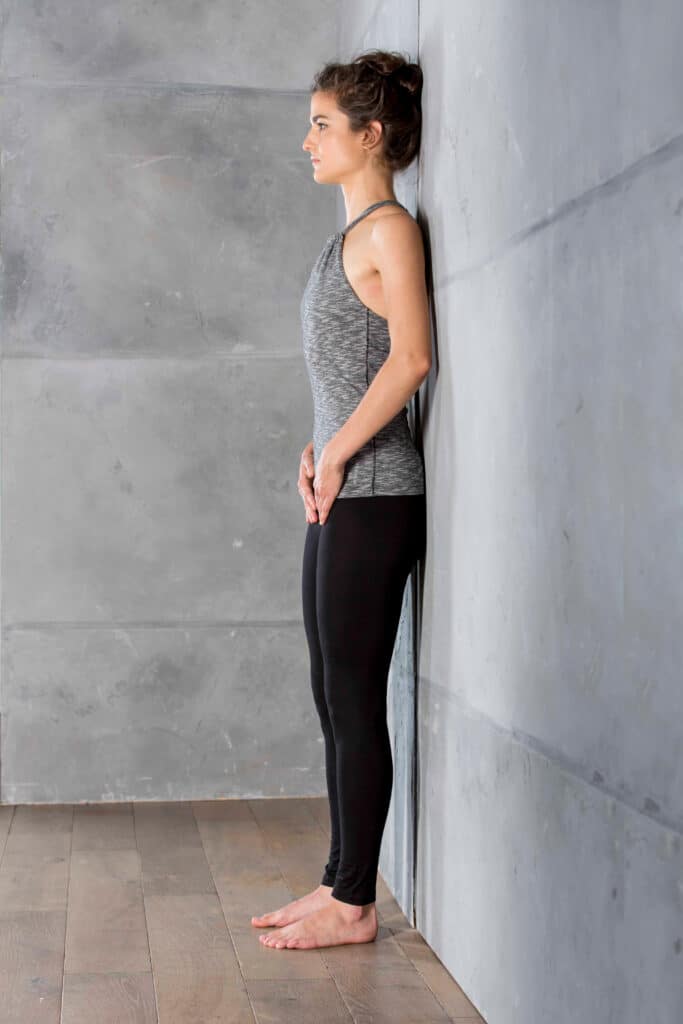
Stretch your arms out fully. Keep your upper arms against the wall, and let your armpits maintain their stretch forward and upward. While holding this stretch, relax your hands, relax your forearms, and release your upper arms from the shoulder blades.
Inhale and, in your mind’s eye, imagine your arm muscles rising up along the long bones toward your armpits. Exhale and open your armpits forward and upward. Repeat three times.
Bend your arms sharply at the elbows, like children do when they play penguin. This penguin, however, positions its fingers so that they’re facing each other.
Stretch your palms toward the floor while inhaling through your nose for as long as you can. Feel how, in this “double stretch,” all your core muscles lengthen and work together to form a support that allows your diaphragm to expand as far to the sides as possible.
Repeat at least three times. Better yet, five times, ten times, 18 times…
With a little practice, you can do these wonderful diaphragmatic breathing exercises while sitting, standing, walking, or lying down. Repeat “Ng ng ng” in your daily life until your tongue can’t help but stay upright in your mouth. When held upright like this, it supports the windpipe… as well as the larynx, the vocal cords, and the neck muscles. And it helps prevent a double chin.
The Interplay Between the Pelvic Floor, Spine, and Diaphragm
Discover the secrets of a sense of physical harmony and understand how everything is interconnected.
Modern bodywork and awareness of our internal structures are more than just a trend—they are the foundation for a healthy and vibrant life. In these workshops, you’ll learn why the connection between the pelvic floor, spine, and diaphragm is so important, and how these elements influence our overall well-being.
The workshops offer you:
- In-Depth Theory: A thorough understanding of why these three elements—the pelvic floor, the spine, and the diaphragm—form the foundation of a stable and healthy body.
- Hands-On Training: Experience for yourself how CANTIENICA® exercises and techniques can help you put this knowledge into practice and give your body a new sense of strength and harmony.
- 30-day access to the classroom: You can practice with the video for 30 days. The audio recording is available for download; after 30 days, you won’t need the video anymore—practicing by ear allows for a deeper immersion in the dialogue with your body.
Take this opportunity to learn from founder Benita Cantieni and take your body awareness to a whole new level.
Workshop 1: Diaphragm and Spine
BREATHE EASILY
Spine. Upright posture. Strong diaphragm.
Freedom for the Organs. Deep Heart Massage.
And plenty of breath for life. Breathe without pressure.
This workshop will show you how to reach your full potential
from the spine and how to
You can use the power of your breath to improve your health.
For body and soul.
Workshop 2: Pelvic Floor and Spine
THE FUNDAMENTAL POWER WITHIN YOU
Stable support in the pelvis. Freedom of movement in the joints.
A smooth stride. Self-confidence. Self-assurance.
Support for the abdominal organs. More intense orgasms. Relaxation
in the clamping fixture.
In this workshop, you’ll learn about your levator ani muscle, the
a strong and healthy pelvic floor. It supports the organs,
keeps the hip joints healthy. It protects the organs in the lower abdomen and stimulates It stimulates the nerves and can make your sexual experiences more intense.